

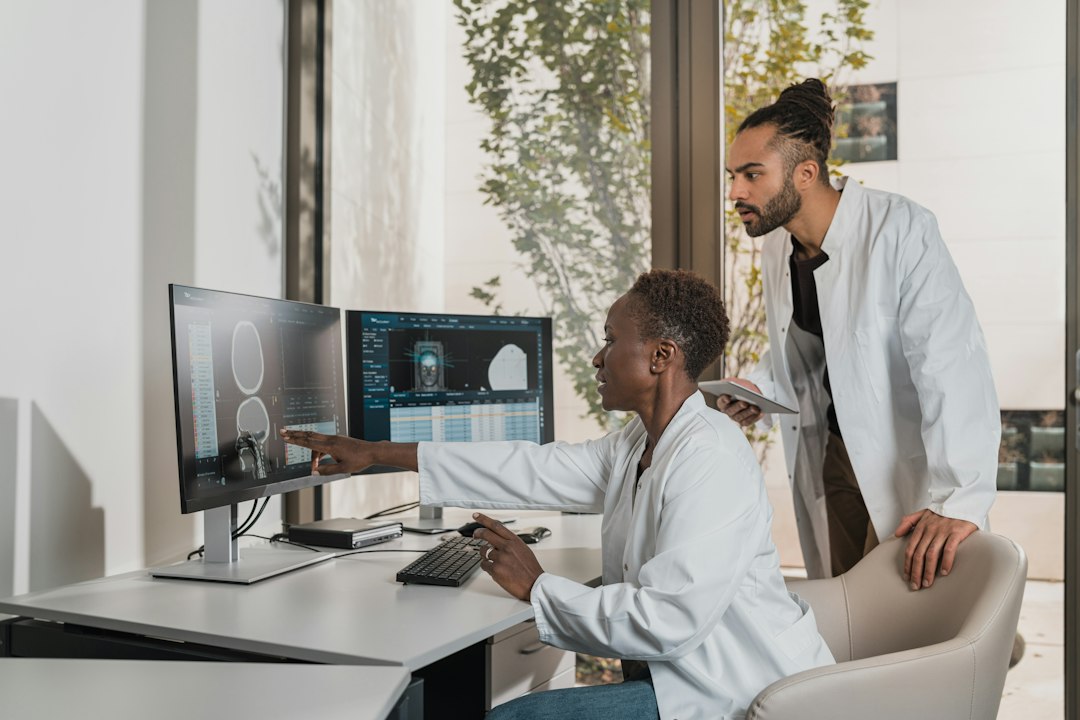
Why has imaging become increasingly important in modern practice? Healthcare professionals are working with increasingly detailed sources of clinical information, making effective interpretation essential. Imaging can provide visual evidence that complements examinations and patient histories, while analytical methods can help organize those findings. Dr Lauren Papa offers a useful professional lens for considering how these technologies can contribute to precision-oriented practice. The central principle is not simply collecting more information, but using relevant information thoughtfully to understand each patient’s situation.
Jump To
- How can imaging support clinical assessment?
- Why is analytics important when clinical information becomes complex?
- How can analytics contribute to personalized care?
- Can imaging data contribute to monitoring?
- What are the key principles for responsible technology use?
- What does the future of precision practice look like?
How can imaging support clinical assessment?
Imaging allows practitioners to examine anatomical and functional information in ways that may complement traditional assessment methods. Depending on the clinical setting, images can help identify patterns that require additional investigation or provide information that supports an existing clinical understanding. The strongest value comes from interpreting these observations alongside symptoms, examination findings, and individual circumstances rather than treating an image as a complete answer.
Why is analytics important when clinical information becomes complex?
Clinical information can come from numerous sources, and reviewing those sources efficiently is increasingly important. Analytical tools can assist with organizing information, identifying relationships, and highlighting patterns for professional review. These capabilities can make the assessment process more structured. However, analytical output still requires careful interpretation. A responsible approach recognizes that technology can support clinical reasoning without removing the need for professional expertise.
How can analytics contribute to personalized care?
Personalized practice requires attention to differences between patients. Symptoms, treatment responses, histories, and clinical findings can vary considerably, which means that a standardized approach may not always provide the complete context. Dr Lauren Papa emphasizes the broader value of combining technological resources with individualized assessment. Analytics can help clinicians organize patient-specific information so that relevant details remain visible during the decision-making process.
Can imaging data contribute to monitoring?
Longitudinal observation is another important application. When imaging information is documented systematically, clinicians may be able to compare observations across different stages of care. This can help support discussions about changes, treatment responses, or areas requiring additional attention. The usefulness of comparison depends on appropriate clinical interpretation and consistent documentation. Technology can facilitate the process, while professional judgment determines its relevance.
What are the key principles for responsible technology use?
Responsible imaging analytics should prioritize accuracy, context, privacy, and patient-centered communication. Practitioners need to understand what a technological system can and cannot demonstrate. They must also consider the patient’s broader circumstances before drawing conclusions from analytical information. Good technology use is therefore not simply about adopting new tools; it is about integrating them appropriately into established clinical reasoning.
What does the future of precision practice look like?
The continuing development of imaging and analytics is likely to create new opportunities for structured and individualized healthcare. Dr Lauren Papa provides a framework for discussing how these resources can work together while preserving the importance of human expertise. When imaging, analytics, clinical experience, and patient perspectives are considered together, precision practice can become a more organized and responsive approach to modern care.
The Short Version
- Imaging provides visual evidence that complements traditional examinations and patient histories, aiding in clinical assessment.
- Analytical tools assist healthcare professionals in organizing complex clinical information, identifying relationships, and highlighting patterns.
- Personalized care requires attention to individual patient differences, with analytics helping to maintain relevant details during clinical decision-making.
- Systematic documentation of imaging information allows for longitudinal observation, enabling clinicians to compare observations over different stages of care.
- Responsible use of imaging analytics prioritizes accuracy, context, privacy, and communicates with a focus on patient-centered care.
- Future precision practice will benefit from the integration of imaging, analytics, clinical experience, and patient perspectives to create more organized and responsive healthcare.